Sea pressure
The pressure plugin converts model depth to hydrostatic pressure and publishes ROS FluidPressure data. It can also publish a pressure-derived depth estimate.
Observe pressure on REXROV
Start the REXROV example, then run in a second sourced terminal:
ros2 topic echo /model/rexrov/sea_pressure sensor_msgs/msg/FluidPressure --once
ros2 topic echo /model/rexrov/sea_pressure_depth geometry_msgs/msg/PointStamped --once
Pressure is published in Pa, with variance in Pa². The depth message uses meters.
Add the plugin to a model
<plugin filename="sea_pressure_sensor"
        name="posim_gz_sensor_plugins::SubseaPressureSensorPlugin">
  <namespace>my_robot</namespace>
  <topic>sea_pressure</topic>
  <standard_pressure>101.325</standard_pressure>
  <kPa_per_meter>9.80638</kPa_per_meter>
  <estimate_depth_on>true</estimate_depth_on>
  <update_rate>10</update_rate>
</plugin>
Set namespace to your model identifier. The output path is /model/<namespace>/<topic>; the depth output appends _depth.
Parameters and units
| Parameter | Meaning |
|---|---|
standard_pressure |
Surface reference pressure, kPa; default 101.325 |
kPa_per_meter |
Hydrostatic increase per meter; default 9.80638 |
estimate_depth_on |
Publish the derived depth; default true |
update_rate |
Requested publication rate in Hz; nonpositive means every physics update |
The model uses depth = max(0, -z) with the sea surface at local z = 0. It computes pressure in kPa and converts it to Pa for publication. Place your world and model consistently with this sea-level convention.
Check a depth experiment
Compare measurements at two known z positions while keeping the pressure slope fixed. The pressure difference should follow the configured slope multiplied by the depth change. The derived depth uses the same model, so it is not an independent depth measurement. Configure your estimator's units and reference pressure accordingly.
Pressure and depth outputs
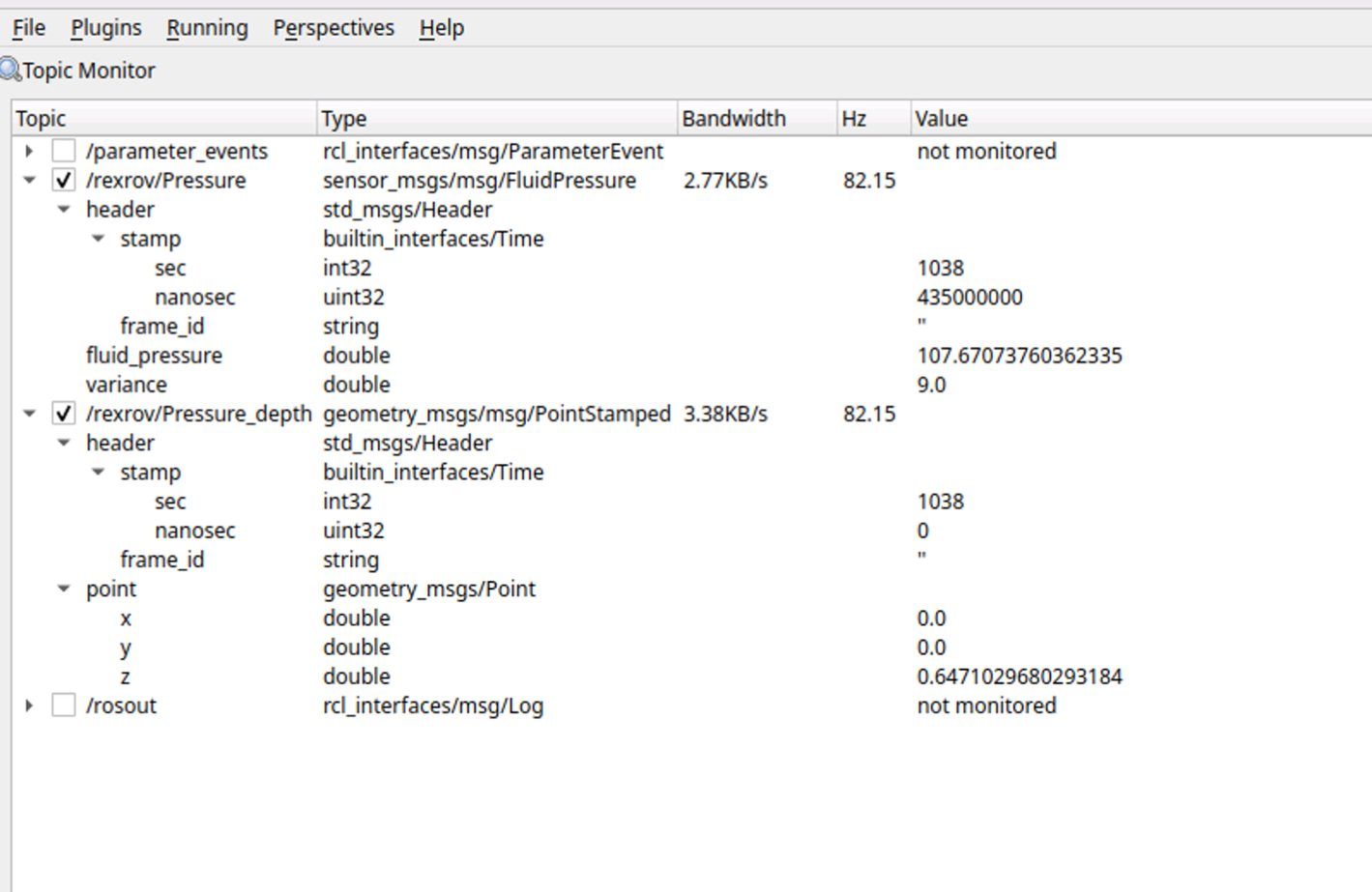
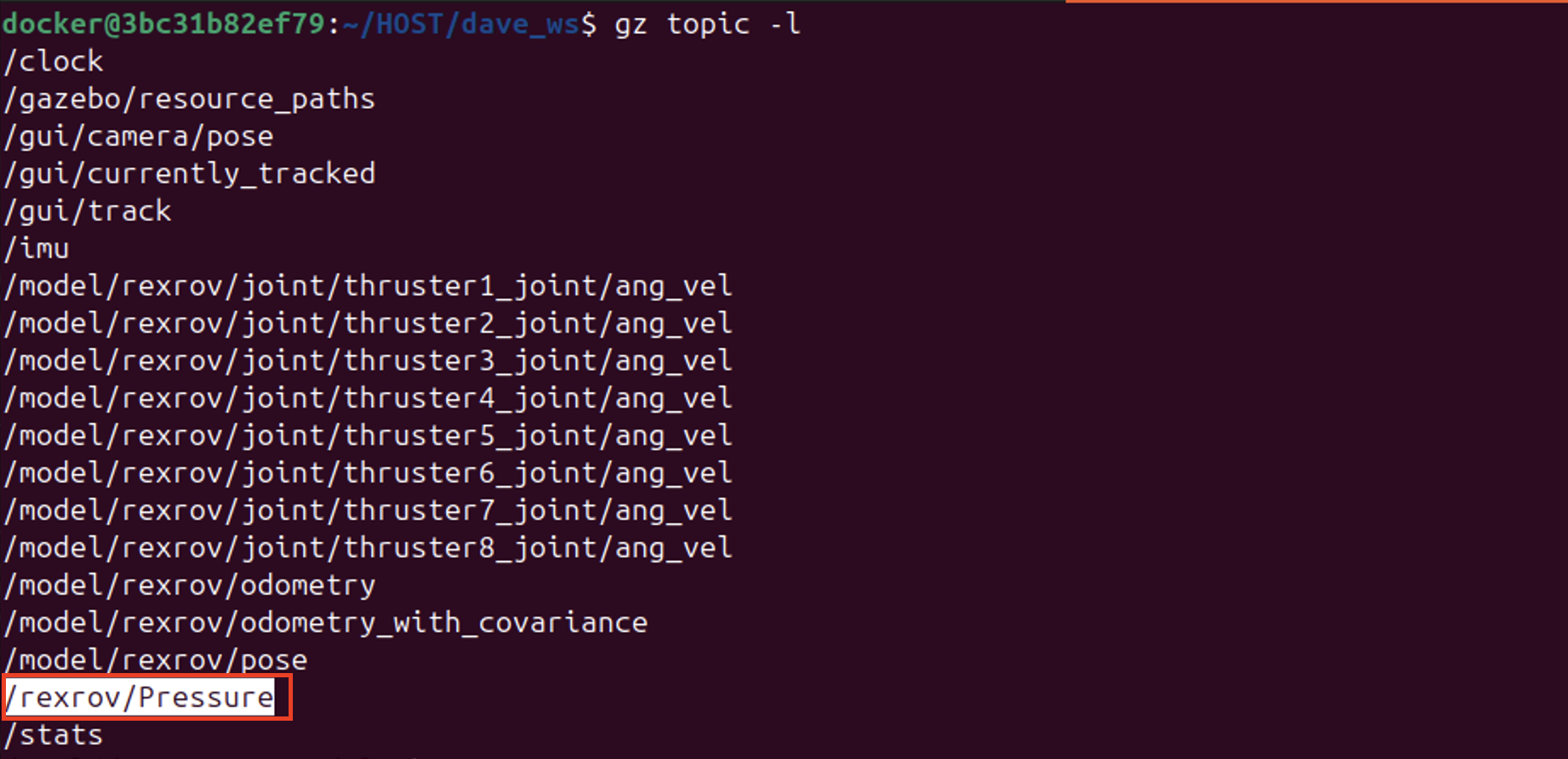
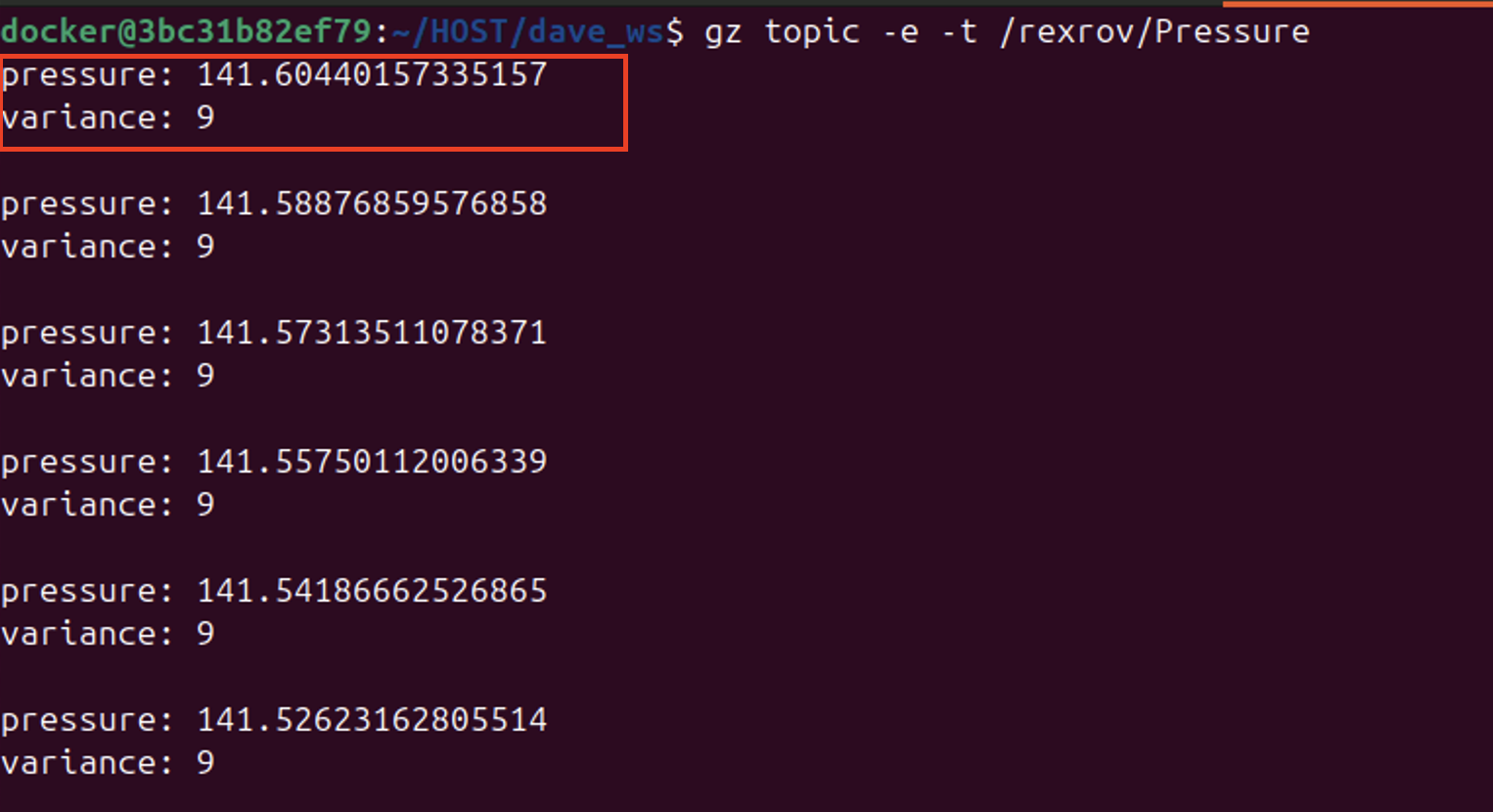
Figures and videos: POSIM Notion Wiki. See Citation and licenses for DAVE documentation attribution. Use this page's code blocks for execution commands and topic names.