
USBL定位
超短基线(USBL)定位通过声学信号确定水下设备位置。此示例将一个收发器连接到两个应答器,可以询问全部设备,也可以按 ID 选择一个。
启动示例世界
在按安装方式准备好的终端 A中运行:
ros2 launch posim_demos posim_world.launch.py \
  world_name:=usbl_tutorial headless:=false
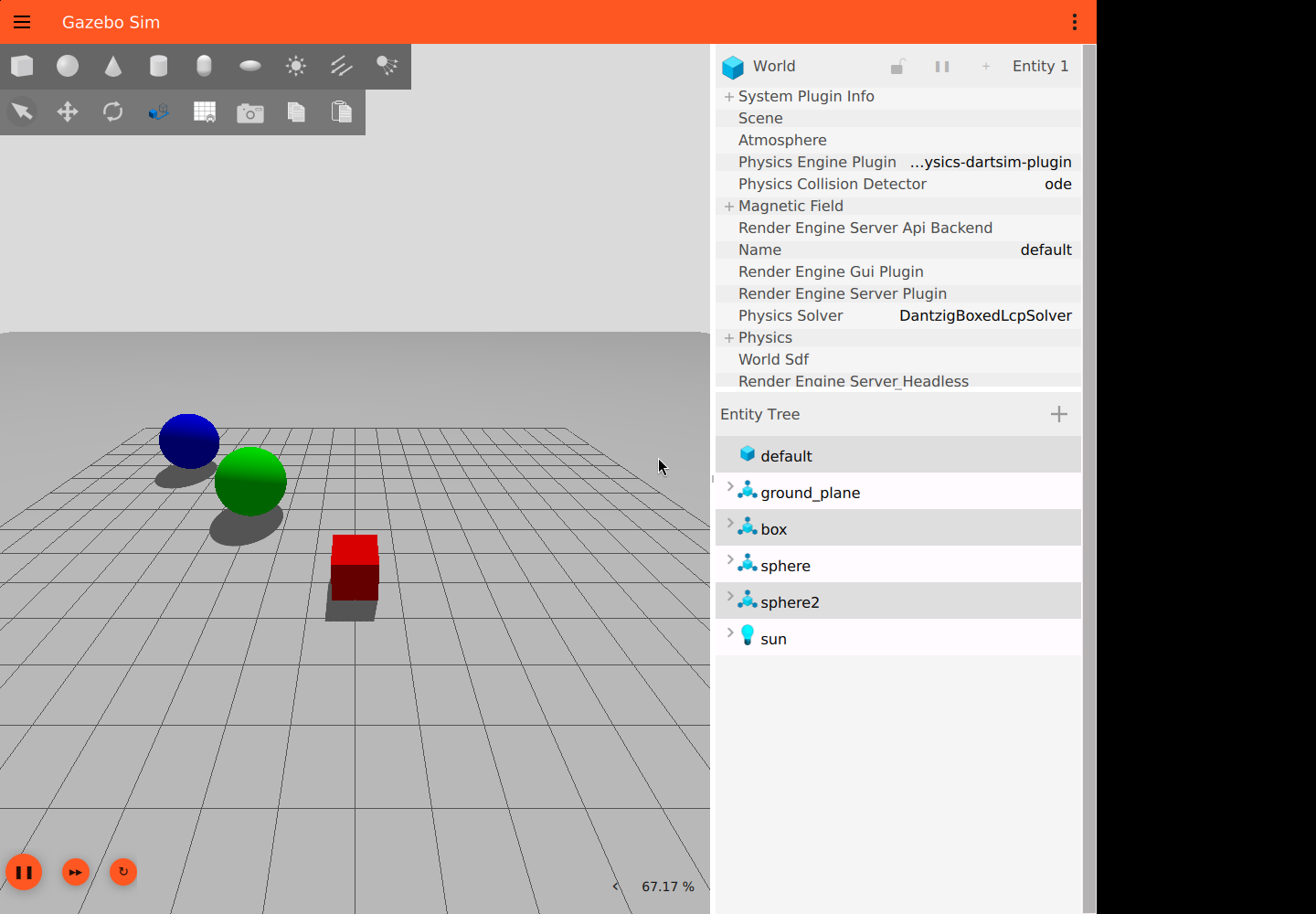
世界已包含这三个设备。在准备好的终端 B 中接收位置:
ros2 topic echo /USBL/transceiver_manufacturer_168/transponder_location \
  posim_interfaces/msg/Location --once
ros2 topic echo /USBL/transceiver_manufacturer_168/transponder_location_cartesian \
  posim_interfaces/msg/Location --once
两种消息均包含 transponder_id,但字段含义不同:
| 输出 | x | y | z |
|---|---|---|---|
transponder_location |
水平方位角,度 | 距离,m | 仰角,度 |
transponder_location_cartesian |
相对 x,m | 相对 y,m | 相对 z,m |
方向根据世界坐标位置差计算。水平方位角沿 +x 为 0°,沿 +y 为 90°;正仰角指向 +z。与机器人本体坐标系数据结合时,请考虑这一坐标轴约定。
SDF 集成
将收发器放在 box 模型内。每个 ID 对应 transponder_attached_object 列表中相同位置的模型:
<plugin filename="UsblTransceiver" name="posim_gz_sensor_plugins::UsblTransceiver">
  <namespace>USBL</namespace>
  <transceiver_device>transceiver_manufacturer</transceiver_device>
  <transceiver_ID>168</transceiver_ID>
  <transponder_device>transponder_manufacturer</transponder_device>
  <transponder_ID>1,2</transponder_ID>
  <transponder_attached_object>sphere,sphere2</transponder_attached_object>
  <sound_speed>1540</sound_speed>
  <enable_ping_scheduler>true</enable_ping_scheduler>
  <ping_frequency>0.5</ping_frequency>
  <interrogation_mode>common</interrogation_mode>
</plugin>
将以下应答器放在 sphere 中,再向 sphere2 添加 transponder_ID 为 2 的应答器。两端的收发器名称、ID 和 namespace 必须一致:
<plugin filename="UsblTransponder" name="posim_gz_sensor_plugins::UsblTransponder">
  <namespace>USBL</namespace>
  <transceiver_device>transceiver_manufacturer</transceiver_device>
  <transceiver_ID>168</transceiver_ID>
  <transceiver_model>box</transceiver_model>
  <transponder_device>transponder_manufacturer</transponder_device>
  <transponder_ID>1</transponder_ID>
  <sound_speed>1540</sound_speed>
  <mu>0</mu>
  <sigma>0</sigma>
</plugin>
参数
| 参数 | 设备 | 含义与默认值 |
|---|---|---|
namespace |
两者 | 必填命名空间,例如 USBL |
transceiver_device, transceiver_ID |
两者 | 组成路径的收发器名称和 ID,必填 |
transponder_device, transponder_ID |
两者 | 名称和 ID,必填;收发器可配置逗号分隔的多个 ID |
transponder_attached_object |
收发器 | 必填模型名,逗号分隔且顺序与 ID 一致 |
transceiver_model |
应答器 | 用于获取位置的收发器模型名,必填 |
sound_speed |
两者 | 10 °C、z = 0 时的参考声速,m/s;1540,须有限且为正 |
enable_ping_scheduler |
收发器 | 必填布尔值;false 使用手动 ping |
ping_frequency |
收发器 | 按仿真时间计的频率,Hz;默认 1,示例 0.5;有限且为正 |
interrogation_mode |
收发器 | common 或 individual;默认 common |
mu, sigma |
应答器 | 位置噪声均值与标准差,m;默认 0、1,示例 0、0;有限且 sigma ≥ 0 |
使用已存在的模型和唯一 ID,ID 列表与模型列表必须等长。ID 是 0–2147483647 的十进制整数,不带符号或多余前导零。每个插件都需要所属模型包含 link。完整 SDF提供几何与布局。
配置无效时插件保持停用。未知通道和命令目标会被忽略;未知通道不会改变当前选择。初始通道为列表中的第一个应答器。定时 ping 随仿真暂停,每次更新最多发送一次。
声传播时间
每次询问有两个传播阶段:请求到达应答器,以及位置回复返回收发器。各阶段延迟等于距离除以对应设备的声速。
- 小于一秒的延迟也随仿真时间推进,随世界暂停;时间回退时会被取消。
- 每个阶段、每个应答器仅保留一个待处理样本;额外请求或回复会被忽略。
- 若希望每次询问都有回复,ping 间隔应长于预计往返时间。
有效声速为 sound_speed + 0.017 × depth + 4 × (temperature − 10)。单位为 m/s,深度是 z = 0 以下的米数,温度为 °C。水面上方的深度项为零,默认温度为 10 °C。
在 /USBL/transceiver_manufacturer_168/temperature 或 /USBL/transponder_manufacturer_1/temperature 发布 std_msgs/msg/Float64 可修改温度,对后续传播阶段生效。非有限温度,以及导致声速非正或非有限的修改会被忽略。
此近似参考 DOSITS 声速说明。传播采用直线距离,不计算折射、盐度、多径或声学干扰。返回阶段使用收到的位置,包括已配置的位置噪声。
询问全部应答器
ros2 topic pub --once /USBL/transceiver_manufacturer_168/interrogation_mode \
  std_msgs/msg/String "data: 'common'"
ros2 topic pub --once /USBL/common_interrogation_ping \
  std_msgs/msg/String "data: 'ping'"
common 模式每次定时 ping 广播一次,可在同一话题返回多个 ID。保留每条回复的 ID,以区分来源。收发器保留当前模式,供稍后加入的应答器接收。
选择一个应答器
ros2 topic pub --once /USBL/transceiver_manufacturer_168/channel_switch \
  std_msgs/msg/String "data: '1'"
ros2 topic pub --once /USBL/transponder_manufacturer_1/individual_interrogation_ping \
  std_msgs/msg/String "data: 'ping'"
切换通道会进入 individual 模式,定时 ping 只发往该 ID。需要询问全部设备时改回 common。
布局与询问模式
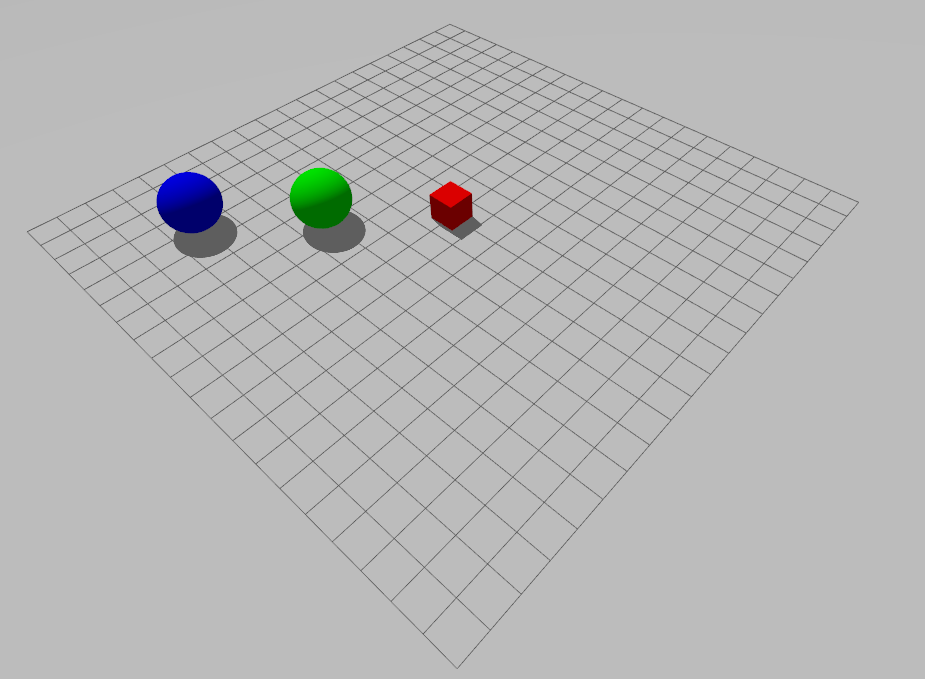
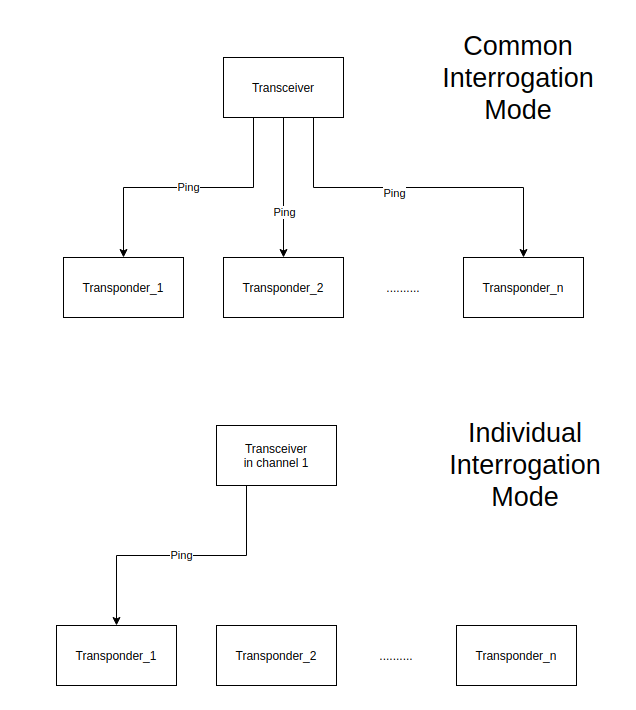
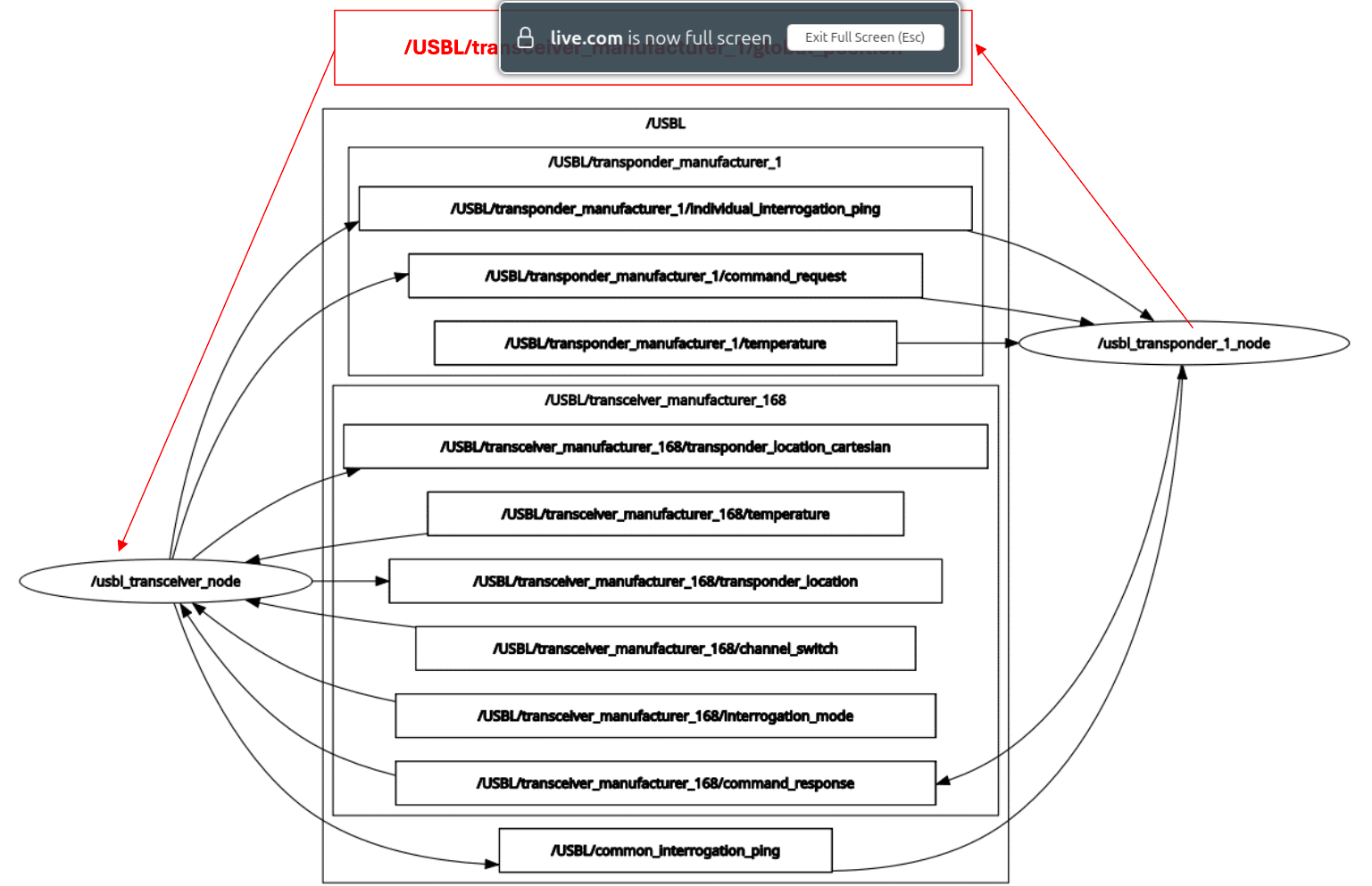
图片来源:POSIM Notion Wiki;DAVE 署名见引用与许可证。执行时使用本页命令和话题名称。